


Sea Trials - USCG License Exam
4.5172.00 Reviews
App Specs
- Version
- 8.9.2
- Updated On
- License
- Free
- Downloads
- 10,000+
- Developer
- Lokey Labs, LLC
- Categories
- Education
- Platform
- Android
Screenshots
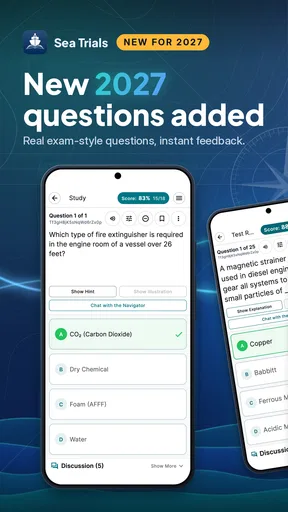
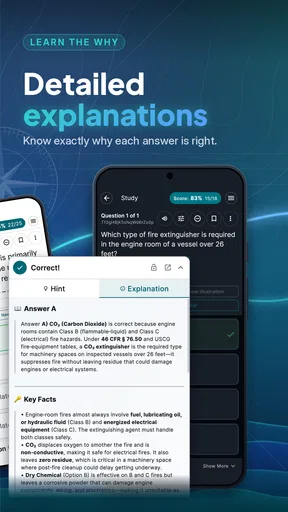
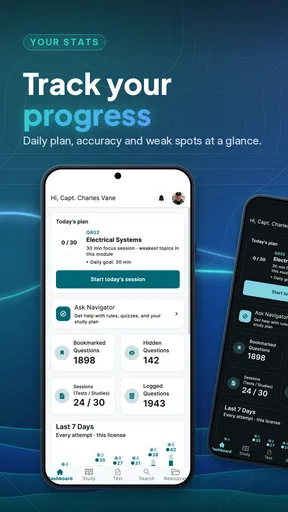
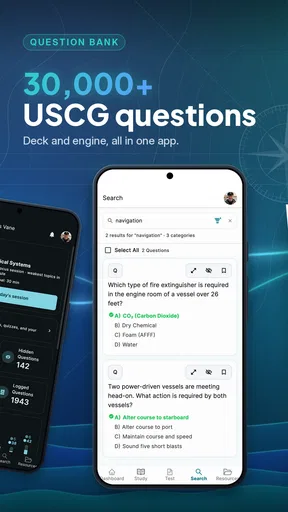
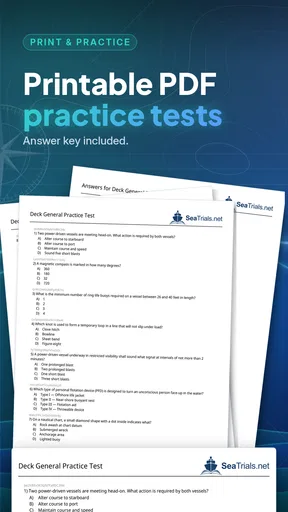
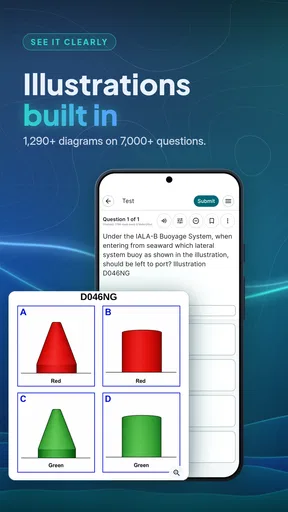
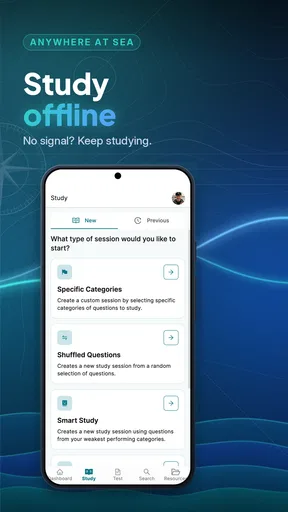
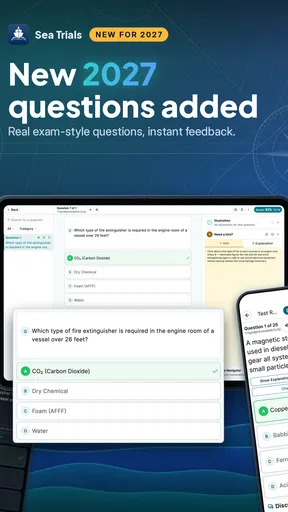
 Analysis by AppCompare
Preparing for a United States Coast Guard license exam is different from casually reading a boating guide. You need to recognize the wording used in exam questions, recall rules under pressure, and notice the small distinctions that separate a safe answer from an almost-correct one. Sea Trials - USCG License Exam is built for that kind of preparation, and I found it most useful when I treated it as a focused practice tool rather than a complete replacement for official study material.
Developed by Lokey Labs, LLC, this free Education app takes a direct approach to USCG license preparation. Its store summary is “Upgrade USCG License,” while the short description uses the phrase “Sea Trials.” The app is suitable for Everyone, runs on Android 7.0 or later, and the current version is 8.9.2. Those details matter because this is the sort of app you may want to open on an older phone at a marina, in a classroom, or during a short break before a study session.
My overall impression is that Sea Trials works best as a repeatable question-and-review routine. It gives prospective mariners a way to turn spare minutes into active recall, which is generally more effective than rereading the same notes. At the same time, I would not use it as my only source. Licensing exams involve regulations, navigation knowledge, safety practices, and terminology that deserve authoritative reference material alongside practice questions.
How I built a practical study routine with Sea Trials
I started with a simple baseline workflow: open the app, work through a manageable set of questions, and pause whenever an answer felt like a guess. The important part was not merely seeing a score. I paid attention to why an answer was right and what wording had caused hesitation. That made the app more valuable than a quick quiz that I completed on autopilot.
A useful session can fit into several ordinary situations. For example, a crew member waiting for a weather update or sitting before a training appointment can complete a short practice run without unpacking a textbook. Later, the questions that caused trouble can be revisited with a printed reference or official study guide. This two-step habit keeps the app in its proper role: a convenient recall tool that points out weak areas, not the final authority on maritime requirements.
I also found it helpful to separate recognition from understanding. If I remembered an answer because it looked familiar, I marked that topic mentally as unfinished. A license candidate should be able to explain the principle in plain language, identify the relevant situation, and distinguish it from a similar rule. Sea Trials is particularly useful for exposing those gaps because a familiar-looking question can feel easy until its wording changes.
The app’s free entry point makes it approachable for someone deciding whether mobile practice belongs in a study plan. In-app purchases range from $29.99 to $299.99 per item, so I would review the available purchase choices carefully before committing. A person who only wants occasional practice may find the free experience sufficient, while a serious candidate should compare any paid material with the cost and coverage of a recognized course or current reference package.
Worth Reading Before You Choose

Flipboard Shows What News Apps Must Do Beyond the Feed

Switching to Android Auto Means Rethinking Your Driving Routine

Google Calendar Makes a Crowded Week Easier to Manage

Ludo King Makes the Most of the Minutes Between Plans

Baby Panda World Brings Quick Play to Modern Phones, but Its Game Library Feels Busy

ESPN’s Live Game View Makes Following Close Games Easier
What to check before making it your main practice tool
Before settling into daily use, I would first confirm that the material matches the license path being pursued. “USCG license” can refer to different professional goals, and preparation needs vary depending on the credential and the candidate’s existing experience. Sea Trials can support the study process, but it should not encourage a one-size-fits-all approach.
I would also check the app’s behavior on the particular phone or tablet being used. The minimum operating system is Android 7.0, which covers many older devices, but compatibility alone does not guarantee that every screen will feel equally comfortable. Question-based study is easier when text is readable and answer choices can be reviewed without rushing. A larger screen may be preferable for longer sessions, while a phone is convenient for short repetitions.
Another practical check is how you record mistakes. If the app does not give you the kind of explanation you need for a difficult topic, keep a separate notebook or digital document. Write down the question theme, the reason your first answer was tempting, and the rule or concept that resolves it. This creates a personal error log instead of leaving your progress trapped inside a score.
I would avoid studying only when an exam is close. Short, repeated sessions are better suited to maritime terminology than one long cram session. A good pattern is to answer questions on one day, review the underlying topic from trusted material on the next, and then return to similar questions later. That spacing helps reveal whether you truly learned the concept or merely remembered the previous wording.
Settings and habits that reduce wasted effort
Sea Trials is not the kind of app where changing every option transforms the experience. The more useful “settings” are the choices I make around each session: whether I am testing myself honestly, whether I am reviewing explanations, and whether I am using the phone in a distraction-heavy environment. I prefer to silence unrelated notifications and keep a reference book nearby, because interruptions make easy questions feel harder and encourage guessing.
If the app offers selectable study areas or question groupings on your installation, I would use them deliberately rather than jumping randomly every time. Start with the subject that feels weakest, then mix it with stronger areas once the basic ideas are stable. Focused practice is efficient for learning a gap; mixed practice is better for checking whether you can identify the relevant rule without being told the topic first.
One of the most useful habits is to answer before looking for clues in the wording. Read the full question, form an answer in your head, and only then compare the choices. This prevents the app from becoming a recognition exercise. I would also avoid tapping quickly just to keep a streak of correct responses. A slower, honest answer gives better information about readiness than a fast selection based on a familiar phrase.
When reviewing an incorrect response, I recommend asking three questions. What fact did I forget? What assumption did I make? Which words in the question changed the situation? The third question is easy to overlook, but it matters in exam preparation. Many mistakes come from applying a remembered rule outside the conditions where it belongs.
Because the app has an average rating of 4.5 from around 328 ratings, it has clearly been useful to a meaningful group of learners. I still would not treat that rating as proof that the content fits every license candidate. Ratings tell me that the basic experience works for many people; they do not replace checking the scope, currency, and depth of the material against my own exam plan.
Faster patterns for short sessions and deeper review
The fastest productive pattern I found was a “three-pass” routine. On the first pass, answer without consulting notes. On the second, revisit only the uncertain or incorrect items and explain the reasoning aloud or in writing. On the third, study the related rule outside the app. This avoids spending equal time on material I already know and material that needs real attention.
Another effective pattern is to use the app at different times of day for different purposes. A brief morning session can test recall before new information interferes. An evening session can focus on reviewing errors. The point is not to maximize the number of questions; it is to create enough separation that memory has to work. That is a more demanding test of readiness than immediately repeating the same quiz.
I also like pairing questions with realistic scenarios. If a question concerns navigation, picture the vessel, visibility, traffic, and responsibilities involved instead of treating the answer as an isolated sentence. If it concerns safety equipment, imagine checking a boat before departure and ask what would actually be inspected. This mental translation turns abstract study into operational thinking, which is important for anyone planning to use a license in real work.
For experienced users, the strongest shortcut is not skipping difficult questions. It is sorting mistakes by cause. I would create separate notes for forgotten terminology, misread conditions, calculation errors, and uncertainty between two plausible choices. Each category needs a different response: memorization for terminology, careful reading for conditions, worked examples for calculations, and comparison tables for similar concepts.
Sea Trials is also more convenient than carrying a full study book everywhere, but convenience can create a weakness. A phone encourages fragmented attention, and a small screen is not ideal for building detailed notes. I would use the app for retrieval practice and use paper or a larger device for diagrams, regulatory excerpts, and longer explanations. That division gives each format a job instead of forcing the app to do everything.
Where the app helps, and where it reaches its limits
The clearest strength is accessibility. With more than 10K installs and a free price, Sea Trials is easy to try before deciding how much structure your preparation needs. It can give a beginner a first sense of the vocabulary involved and give an experienced mariner a portable way to keep knowledge active between formal study sessions.
Its main limitation is the same one shared by most quiz apps: selecting the right answer is not identical to understanding the subject. A candidate can become good at spotting familiar patterns while remaining weak at applying a rule to a new situation. That is why I would deliberately change the context after each practice topic and confirm important information through current, authoritative sources.
I would also be cautious about relying on an app for content that may change or that requires precise interpretation. Exam preparation benefits from material aligned with the current requirements for the specific credential. Sea Trials can be a useful layer in that plan, but a formal course, instructor, official guidance, or comprehensive manual may be the better choice when you need structured explanations, diagrams, calculations, or clarification from a qualified person.
The paid in-app items deserve the same practical scrutiny. A higher price does not automatically mean better value for a particular learner. Before purchasing, I would ask whether the material covers the exact exam subjects, whether it supplies explanations rather than only questions, and whether it fits the way I learn. Someone who needs accountability and instructor feedback may get more from a course, while someone who already understands the material may prefer a focused question bank.
There is also a clear audience mismatch. A complete beginner who has never handled a vessel should not mistake practice questions for seamanship training. Conversely, a highly experienced candidate looking for deep technical instruction may find a mobile quiz format too narrow. The app sits most comfortably between those extremes: learners who have study material available and want regular, portable testing are likely to benefit the most.
How it compares with books, courses, and ordinary flashcards
Compared with a traditional book, Sea Trials is quicker to open and better suited to active recall. A book is usually stronger for building a complete explanation from the ground up, checking diagrams, and following a structured curriculum. I would use the app after reading a topic, not instead of reading it, especially when the subject involves exceptions or several related rules.
Compared with a classroom or online course, the app is more flexible and less demanding of a fixed schedule. A course is better when I need an instructor to explain a confusing point, correct a misunderstanding, or organize preparation from beginning to end. The app cannot replace that human feedback. Its advantage is that it lets me test myself repeatedly without arranging another lesson.
Compared with homemade flashcards, Sea Trials is more convenient because the questions are already prepared. Personal flashcards are better at targeting my exact mistakes and adding explanations in my own words. The most effective combination is to use the app to discover weak areas, then create a small set of personal cards for the concepts I repeatedly miss.
That comparison also explains why I would not judge the app solely by how entertaining it feels. Good exam preparation is sometimes repetitive. The real question is whether the repetition exposes uncertainty and leads me back to a reliable explanation. If it does, Sea Trials earns a useful place in the workflow. If I am only tapping through familiar answers, another study method is needed.
Who should use Sea Trials - USCG License Exam?
I would recommend Sea Trials - USCG License Exam to a candidate who wants mobile practice, already has access to dependable study material, and is willing to review mistakes instead of chasing a high score. It is especially practical for filling small gaps in the day and for maintaining familiarity with exam-style wording during a longer preparation period.
I would be more cautious about recommending it to someone who needs a complete beginner course, current regulatory interpretation, or personal instruction. That learner should start with a structured program or qualified teacher and add the app later. I would also skip making it the centerpiece of preparation if the paid content does not match the exact license being pursued or if the candidate needs extensive calculations and visual instruction.
The age rating of Everyone makes it broadly accessible, but accessibility should not be confused with professional suitability. The person using it still needs to choose the right exam path, understand the practical responsibilities behind the questions, and verify important knowledge through appropriate sources. A friendly interface cannot make an unsuitable study plan suitable.
My verdict after using it as a repeatable study companion
Sea Trials - USCG License Exam is a useful, focused Education app for turning idle minutes into active practice. I like its portability, its low barrier to entry, and the way it can reveal which topics deserve another look. The developer, Lokey Labs, LLC, has positioned it as a practical study companion rather than a substitute for every other form of preparation, and that is how I would use it.
My strongest recommendation is to build a repeatable habit around it: answer honestly, log the reason for each mistake, study the underlying concept elsewhere, and return later with mixed questions. That workflow extracts more value than simply repeating quizzes until the answers look familiar. It also protects against the biggest weakness of mobile exam tools: confusing recognition with mastery.
With 172 reviews alongside its broader rating history, the app has attracted enough user feedback to make it a credible option to try, but personal fit still matters more than popularity. I would begin with the free experience, compare its scope with the target USCG license, and only then consider an in-app purchase. The right choice depends on whether the additional material fills a real gap in your preparation.
In the end, I see Sea Trials as a convenient second layer in a serious study plan. It is not the best choice for someone seeking a full instructional course, but it is a sensible companion for learners who want regular recall practice on Android. Use it to test what you know, not to avoid learning what you do not. With that expectation, it can make preparation more consistent and help turn scattered study time into measurable progress.
Pros
- Covers key USCG license topics in a focused study format.
- Practice questions help reinforce maritime terminology and regulations.
- Useful for reviewing knowledge during short study sessions.
- Can support preparation for several recreational and professional exams.
- Straightforward interface makes question practice easy to start.
Cons
- It cannot replace official USCG materials or approved classroom training.
- Some users may find the question pool limited after repeated practice.
- Exam coverage may vary depending on the selected license category.
- Requires consistent self-study to identify and correct knowledge gaps.
- A passing score in the app does not guarantee success on the official exam.
FAQs for Sea Trials - USCG License Exam
What is Sea Trials - USCG License Exam?
Sea Trials - USCG License Exam is a study and practice app designed for mariners preparing for United States Coast Guard license examinations. It brings together practice questions, exam-style quizzes, and review material covering important navigation, deck, safety, and maritime knowledge topics. The app is intended as a preparation aid, not as a replacement for official USCG publications, approved courses, or professional instruction.
Which USCG license exams does Sea Trials cover?
The exact subjects and license categories available can depend on the app version and the content package selected. In general, Sea Trials focuses on knowledge areas commonly tested in USCG credential examinations, such as navigation, rules of the road, deck general, safety, and related mariner subjects. Before downloading, users should check the current store description to confirm that their specific license or endorsement is supported.
Can beginners use Sea Trials, or is it only for experienced mariners?
Beginners can use Sea Trials to become familiar with USCG-style questions and identify the subjects they need to study, but the app is most effective when combined with a structured learning plan. New mariners may find some terminology and regulations difficult without prior instruction. Experienced applicants can use it for revision, quick practice sessions, and checking weak areas before scheduling an examination.
Does completing the quizzes guarantee that I will pass the USCG exam?
No. Completing practice quizzes does not guarantee a passing score on an official United States Coast Guard examination. The app can help you practice recall, understand question formats, and measure your progress, but official exams may include different wording, subjects, or difficulty levels. Applicants should also study current regulations and reference materials and verify all requirements with the appropriate USCG office or testing provider.
Is Sea Trials - USCG License Exam free to download and use?
The availability of free features, paid content, subscriptions, or in-app purchases may vary by platform and app version. Some users may be able to download the application at no cost while needing to pay for expanded question banks or additional exam subjects. Review the Google Play Store or Apple App Store listing carefully before downloading, including pricing, subscription terms, and cancellation details.


